
Introduction
Creating a secret room is like blending home security with a touch of mystery. It’s where you can hide valuables, escape a tricky situation, or just add a cool feature to your home. Lately, many people love designing secret spaces that stick to a single color. This approach makes the room look sleek, mysterious, and super stylish. But building a hidden room in just one color isn’t easy—it takes planning, the right tools, and smart tricks.
Planning Your Secret Room in a Single Color
Identifying Purpose and Functionality
First, decide what this secret room will be used for. Will it be a safe hideaway, a home office, a fun entertainment space, or a panic room? Your answer shapes the design. For instance, a room meant for relaxing should feel calming, maybe with soft blues. A panic room needs to feel secure and strong, so darker shades like black or gray work well. Think about what you want to do there, and then plan accordingly so the solution blends right in.
Choosing the Right Color Palette
Picking the perfect color is key. Colors influence mood and how others see the space. Blue brings calm and peace—great for a reading nook or quiet hideaway. Black adds mystery and elegance, fitting for a secret lounge or a hidden gaming zone. Red might energize the space, but it’s less common for secret rooms since it’s bold. When choosing one dominant color, remember to match it with your room’s purpose. Pick a hue that feels natural, not forced.
Integrating the Secret Element Discreetly
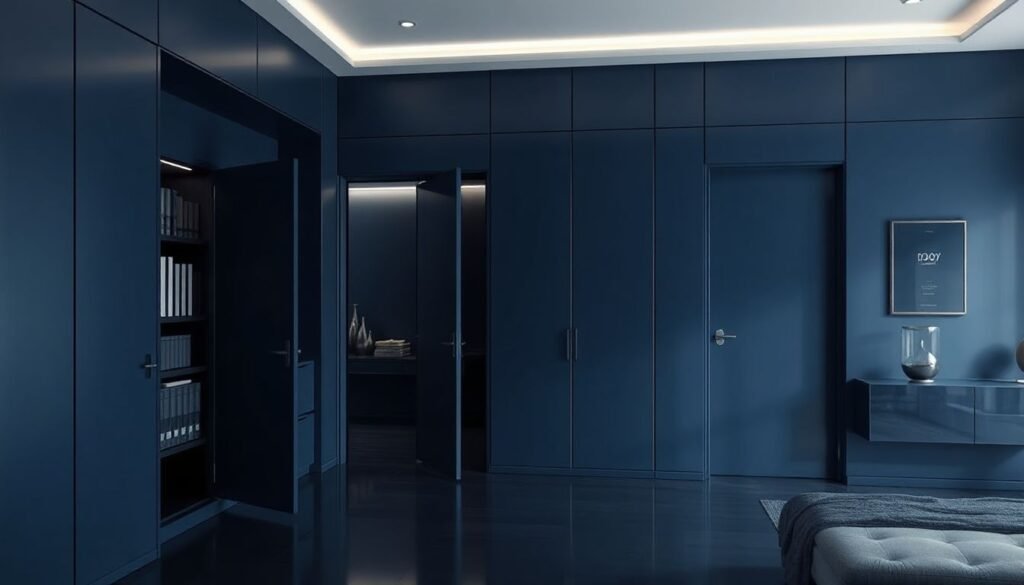
The trick with secret rooms is making the entrance almost invisible. Use design tricks like matching the door to the wall color, so it blends perfectly. Concealed hinges and flush handles help hide any hardware. Architectural cues, like a bookshelf or a panel of cabinetry, can act as a door without looking out of place. Make sure every detail makes the entrance feel like part of the decor, not an obvious secret.
Design Strategies for a Cohesive Monochromatic Theme
Selecting Materials and Textures in a Single Color
Using one color doesn’t mean your space has to look flat. Mix textures to add interest. For example, matte walls combined with glossy black fixtures create a rich sense of depth. Use fabric throws or rugs in the same hue for softness, or wood panels for warmth. Different materials bring personality while keeping your color scheme consistent. Whether you’re going modern with sleek glass or rustic with reclaimed wood, textures make all the difference.
Lighting Techniques to Enhance the Single-Color Effect
Lighting lets you play with shadows and highlights, making monochrome look dramatic. Layer your lighting to bring out textures — soft ambient light, focused task lights, and hidden LEDs. Dimmable fixtures give you control to change the vibe. For secret rooms, hidden lighting is a bonus, allowing the space to appear empty while still being lit. Lighting also helps you reveal or hide the door, adding an extra layer of mystery.
Creating Visual Interest Without Breaking Monochrome
Use subtle tricks to give the room depth. Shadows from lighting can create patterns on the walls. Decorate with art, plants, or furniture that’s in the same hue but has different finishes—matte, gloss, or textured. Slight variations in tone and finish keep the eye engaged, making the space feel intentional and stylish even in one color.
Construction and Mechanisms for Secure and Hidden Entrances
Choosing the Right Locking and Opening Mechanisms
A secret room needs a lock that’s tough to spot and hard to tamper with. Magnetic locks, pressure-sensitive panels, or touch-activated switches work well. Pick solutions that blend seamlessly with your design. For example, a hidden magnetic catch can open with just a tug or a secret code. These systems are durable and give you peace of mind.
Concealing Doors and Hidden Entrances
Your goal is a door that no one notices. Cloak it with matching panels or cabinetry. A bookshelf that swings open when pushed is classic. Use hardware that’s hidden or minimal. When the door matches its surroundings perfectly, it’s almost impossible to see. Remember, every detail should look natural, like part of the wall or furniture.
Technology and Automation
Smart home systems make secret entry and exit easier. With a touch or voice command, a hidden door can swing open. Sensors detect your approach and activate the door automatically. Automation increases security and makes access quick. It’s smart, sleek, and keeps your secret room truly hidden.
Aesthetic and Safety Considerations
Maintaining Aesthetic Integrity
Balancing concealment with style means paying attention to details. Keep hardware minimal, and choose finishes that match or complement your monochrome scheme. Avoid hardware or handles that stand out. The smoother, cleaner your design, the less likely someone will notice your hidden space.

Ensuring Safety and Accessibility
Safety must never be an afterthought. Make sure emergency exits are in place and easy to access. For example, a hidden exit in case of fire or break-in. Also, keep pathways clear and well-lit for safety, even if it’s a secret space. Combine discretion with safety by working with professionals who understand building codes and security.
Expert Tips and Best Practices
- Review celebrity homes or architects’ projects for ideas and inspiration.
- Interior designers agree that textures and lighting are crucial for a monochromatic secret room.
- Security experts suggest investing in strong locks and digital access controls.
- For DIY builders, start small—use one color, high-quality hardware, and hidden lighting for the best results.
Real-Life Success Stories
Many famous personalities choose monochrome secret rooms. They blend high security with sleek design, proving it’s possible to mix style and safety. Whether it’s a hidden wine cellar or a panic room, the key is planning every detail with care.
Expert Tips for Building a One-Color Secret Room
- Use Concealed Doors:
Opt for flush-mounted or bookshelf doors painted in the same color as the wall for perfect disguise. - Match Furniture and Decor:
Keep chairs, shelves, and decor in the same color palette. Use tone-on-tone textures to avoid a flat look. - Lighting Matters:
Install LED lights or smart bulbs in a matching hue. Soft lighting adds depth while maintaining the monochrome theme. - Hide Technology and Outlets:
Use color-matched covers to hide switches, plugs, or speakers within the design. - Add Smart Security:
For a high-tech touch, install fingerprint locks or hidden keypad entries.
Conclusion
Building a secret room in just one color isn’t just about hiding space — it’s about creating a stunning, secure, and stylish area. Success comes from careful planning, choosing the right materials, and blending technology with design. Remember to balance concealment with aesthetic appeal and prioritize safety. Your perfect secret space is waiting—start planning today with these expert tips and turn your hidden room into a masterpiece.